Machine Learning · Computer Vision
Sign Language Image Classification
1 / 3
Overview
Convolutional Neural Networks (CNNs) are deep learning models that are particularly effective at extracting spatial features from images. Convolutional layers identify local patterns such as edges, textures, and shapes and progressively build higher-level representations of the input image.
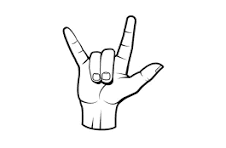
For this project, I developed a CNN-based image classifier to identify sign language gestures. The model was trained on labeled images of hand gestures and learned visual features that distinguish between the 26 alphabet classes.
The goal of the project was to apply the fundamentals of convolutional neural networks to a practical image classification problem and build a model capable of recognizing sign language gestures from images.
Design Approach
Model Architecture
- —Three Conv2d layers extract spatial features from the input images
- —ReLU activation functions introduce non-linearity between convolutional layers
- —MaxPooling layers reduce the spatial dimensions of feature maps while retaining important features
- —Two fully connected Linear layers transform the extracted features into class predictions
- —A Dropout layer reduces overfitting by preventing the network from relying too heavily on individual neurons
- —The final network contains 12 layers: 3 Conv2d layers, 3 ReLU activations, 3 MaxPooling layers, 2 Linear layers, and 1 Dropout layer
Convolutional Layers
- —Conv2d layers learn spatial features from the input images
- —Early convolutional layers identify lower-level features such as edges and simple shapes
- —Deeper convolutional layers combine these features into more complex representations useful for distinguishing gestures
Classification Layers
- —MaxPooling progressively reduces the spatial dimensions of the feature maps
- —The extracted features are passed to fully connected Linear layers
- —The Linear layers combine the learned features to produce the final classification output
- —The network predicts one of the 26 alphabet classes
Simulation & Testing
I evaluated the CNN by training it on labeled images of sign language gestures and using the resulting model to classify the corresponding alphabet classes.
The testing process focused on whether the learned visual features were sufficient to distinguish between the different hand gestures represented in the dataset.
Key Features
- —CNN-based image classification
- —Classification across 26 sign language alphabet classes
- —Three Conv2d feature extraction layers
- —Three ReLU activation layers
- —Three MaxPooling layers for spatial reduction
- —Two fully connected Linear layers
- —Dropout regularization to reduce overfitting
- —12-layer neural network architecture
- —Computer vision and deep learning implementation
- Machine Learning
- Computer Vision
- Convolutional Neural Networks
- Deep Learning
- Image Classification
- PyTorch